Introduction
Pregnancy brings many changes, and your wardrobe often needs to change with you. Clothes that once felt comfortable may become tight around the waist, chest or hips. The right maternity wear can make getting dressed easier while helping you feel confident in your personal style. You do not need to replace your entire wardrobe or buy every item labelled maternity. Instead, choose versatile pieces that provide room to move, suit your routine and can be worn repeatedly.
This guide explains what maternity wear is, when to consider buying it, which fabrics and styles to look for, and how to build a useful wardrobe on a sensible budget. Whether you prefer western outfits, Indian ethnic wear or relaxed home clothing, comfort and fit should guide your choices.
What Is Maternity Wear?
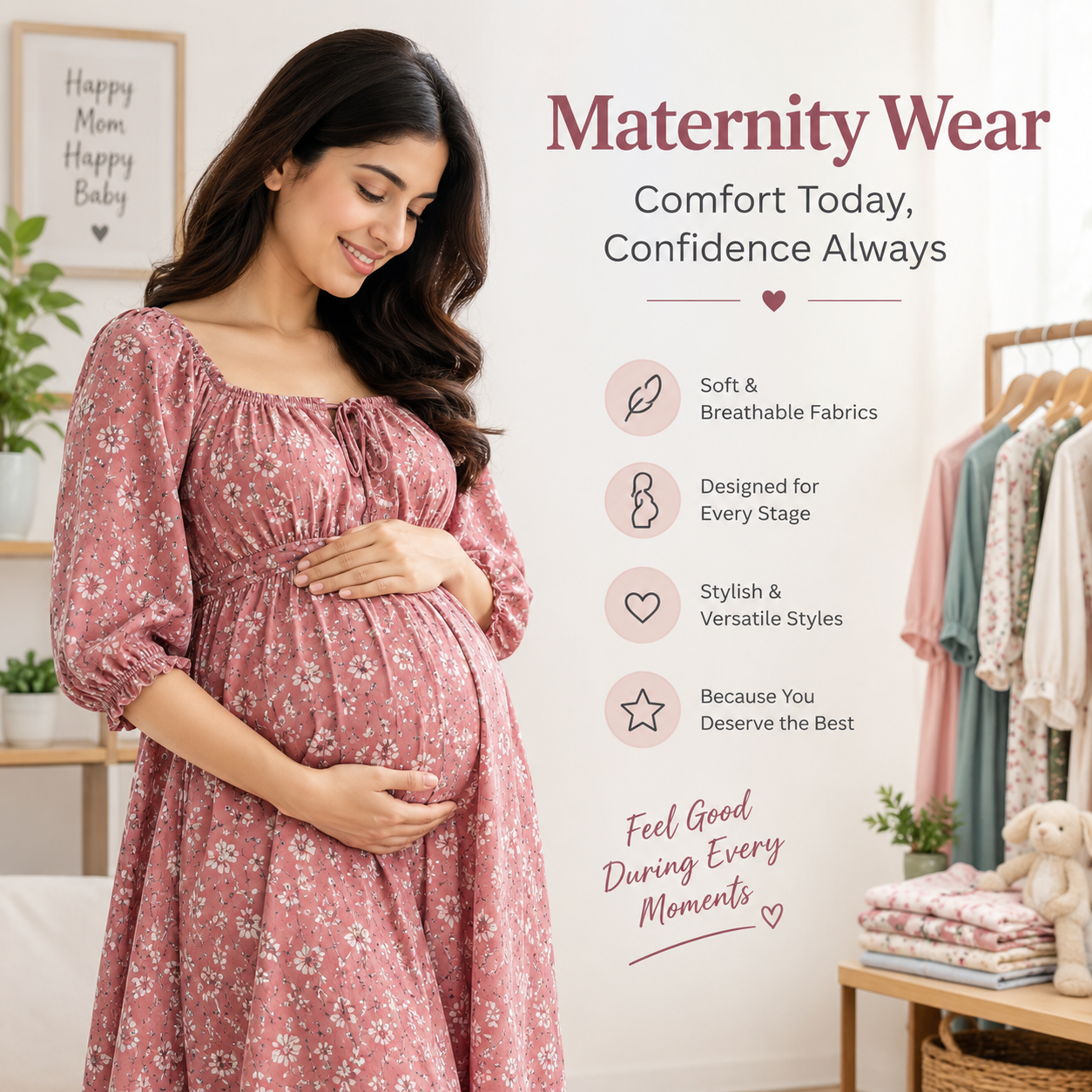
Maternity wear is clothing designed or selected to accommodate the body as it changes during pregnancy. These garments may include stretch panels, adjustable waistbands, extra room around the abdomen, wrap fronts, side gathers or relaxed silhouettes. The aim is not simply to make ordinary clothing larger. Well-designed maternity clothing considers how a garment sits around the bump and how it feels when you sit, walk or move through the day.
Common options include maternity tops, kurtis, dresses, leggings, trousers, jeans, nightwear and feeding-friendly outfits. Some pieces are useful mainly during pregnancy, while others have nursing access that may be convenient after delivery. Choose according to your lifestyle rather than assuming you need every category.
When Should You Start Wearing Maternity Clothes?
There is no single correct week to change your wardrobe. Some people prefer looser clothes early in pregnancy, while others continue wearing their usual outfits for longer. The practical sign is comfort: if waistbands dig in, tops pull across the chest or you find yourself avoiding certain clothes, it may be time to explore maternity options.
Start gradually. Identify what no longer fits comfortably. You may only need stretchy bottoms or longer tops at first. As your body changes, you can add dresses, kurtis or workwear. Buying a few items at a time helps you avoid spending too much before you know what fits your needs. If you are unsure about sizing, check the brand’s size chart and garment measurements instead of automatically choosing a much larger size.
Choose Fabrics That Feel Good
Fabric affects how clothes feel over a full day. Cotton is a popular option for everyday wear because it is familiar, breathable and easy to care for. Cotton blends may offer additional stretch. Rayon and other lightweight draping fabrics can work well for dresses and kurtis, while jersey knits are useful when flexibility is important. For cooler weather, soft layers can provide warmth without requiring a heavy outfit.
Consider the season, the amount of time you will wear the garment and how easy it is to wash. Look at the fabric label, stitching and care instructions. A fabric that looks soft in a product photo may feel different in person, so review product details and return policies when shopping online. A beautiful garment is not a good purchase if it feels restrictive or requires care you cannot manage.
Look for a Comfortable Fit
A good maternity garment should allow room for your changing shape without slipping or pulling. Check the waist, bust, hips, armholes and garment length. Adjustable drawstrings, elastic panels, wrap designs and side gathers can make fit more flexible. For bottoms, consider whether an over-bump or under-bump waistband feels better for you.
Sizing varies between brands, and a maternity medium from one shop may fit differently from another. Read the measurement guide and reviews where available. If trying clothes in person, sit down, stand up and walk a little to see whether the fabric rides up or the waistband feels uncomfortable. Choose pieces that let you move naturally.
Everyday Maternity Wear
For errands, appointments and casual outings, simple pieces are often the most useful. Stretchy leggings or trousers can pair with longer tops, tunics and relaxed shirts. A-line kurtis, empire-waist dresses and loose tunics provide room around the abdomen while maintaining a neat shape. Choose colours and prints that work with several items you already own so you can create more outfits from fewer purchases.
Comfortable homewear is equally important. Soft night suits, relaxed cotton dresses and flexible lounge pants can be practical for resting at home. Look for waistbands that do not press uncomfortably and tops that are easy to put on and remove. Your routine matters: someone who works outside the home may need coordinated outfits, while someone spending more time at home may prioritise nightwear and relaxed separates.
Indian Maternity Wear: Kurtis, Dresses and Ethnic Options
Indian clothing offers many flexible options for pregnancy. A-line kurtis, Anarkali-style silhouettes, tunics, drawstring palazzos and relaxed kurta sets can provide space for a growing bump. Lightweight cotton styles may be practical for warm weather, while dressier fabrics can work for family gatherings and celebrations. Choose a comfortable length and check that seams do not pull when you sit.
If you enjoy sarees or traditional outfits, you may be able to adapt pieces you already own with help from a tailor. The blouse or waistband may need adjustment, so plan ahead for special occasions. For long events, consider how easy it will be to sit, walk and use the restroom. Style matters, but a successful outfit is one that lets you enjoy the occasion without constantly adjusting it.
Workwear and Occasion Wear
If you work in an office or attend formal events, choose clothing that balances polish with flexibility. Stretch trousers with a comfortable waistband, longer shirts, simple dresses and coordinated kurta sets can form a versatile work wardrobe. A lightweight jacket or cardigan can make an outfit feel more structured without requiring tight tailoring.
For celebrations, a flowing dress, a relaxed ethnic set or a wrap-style outfit can feel special while allowing movement. Consider the length, lining, closures and weight of the fabric before buying. If an event involves standing for a long time, choose clothing that feels comfortable throughout the day. Avoid purchasing a costly one-time outfit unless you expect to wear it again or can adapt it for future use.
Plan for Feeding and Postpartum Use
Some maternity clothes can continue to be useful after delivery, especially relaxed dresses, loose nightwear and tops with front openings or wrap designs. If you expect to breastfeed, feeding-friendly features may be worth considering when you shop late in pregnancy. Look for openings that are easy to use and secure enough for your comfort and privacy.
Your body may continue changing after birth, so do not assume your pre-pregnancy wardrobe will fit immediately. Prioritise soft, comfortable pieces and follow any care advice provided by your healthcare professional for clothing around sensitive or healing areas. You can build your postpartum wardrobe gradually rather than buying everything before delivery.
Build a Budget-Friendly Maternity Wardrobe
Begin with a short list of the clothes you wear most often. A practical starter wardrobe might include a few comfortable bottoms, several tops or kurtis, one or two dresses, sleepwear and any work or occasion pieces your routine requires. The exact number depends on how often you do laundry, your climate and your daily activities.
Use existing clothes where they remain comfortable. Open shirts, loose dresses, stretch fabrics and adjustable waistbands may work for part of pregnancy. Borrowing or buying pre-loved clothing can also reduce costs. Before buying something new, ask whether it matches at least two or three items you already own. Compare fabric details, sizing, washing instructions and return terms—not just the displayed price. The best value is clothing you feel comfortable wearing repeatedly.
Common Shopping Mistakes to Avoid
One common mistake is buying too many clothes too early. Your fit preferences may change as pregnancy progresses, so start with a few essentials and add items when needed. Another mistake is choosing a larger size in regular clothing without checking the shape; a garment may be loose at the shoulders but still tight around the bump. Maternity-specific cuts can offer a more balanced fit.
Do not ignore garment length, transparency, closures or washing requirements. Product photographs may not show how fabric behaves when sitting or bending, so read the details carefully. Avoid assuming every maternity item will automatically be comfortable. Judge each garment by its construction, measurements and your preferences.
Frequently Asked Questions
Is maternity wear necessary? No. You can continue wearing regular clothes that remain comfortable. Maternity-specific pieces are useful when your usual clothes no longer fit well.
Should I buy a bigger size? Check the maternity brand’s size chart first. Many maternity garments are designed for a changing bump, so sizing up unnecessarily may create a poor fit elsewhere.
Which fabric is best for maternity wear? It depends on climate and preferences. Cotton and soft blends are common everyday choices; look for comfort, care instructions and suitable stretch.
Can maternity clothes be worn after delivery? Many can, especially relaxed styles and feeding-friendly designs. Their usefulness depends on fit and garment features.
How many maternity outfits do I need? There is no fixed number. Start with the pieces you need for your routine and add more only when necessary.
Conclusion
Choosing maternity wear is about making daily life more comfortable while respecting your own style and budget. Look for soft-feeling fabrics, flexible fits and versatile designs that work for your routine. Begin with a few essentials, check measurements before purchasing and consider whether an item can be worn after delivery. Explore the maternity collection at [Your Brand Name] to find options that suit your preferences, and contact the team if you need help choosing a size or style.