Introduction
Shopping for maternity wear can feel confusing when your body is changing and many products appear to promise the perfect fit. It is easy to buy too much too early, choose items that do not match your routine or spend money on outfits you wear only once. A simple shopping checklist can help you focus on what you actually need.
The goal is not to create a large wardrobe. It is to find comfortable clothes that work for your daily life, suit your budget and can be worn repeatedly. This guide covers the essentials, what to look for in each garment, how to shop online and which purchases you may be able to skip.
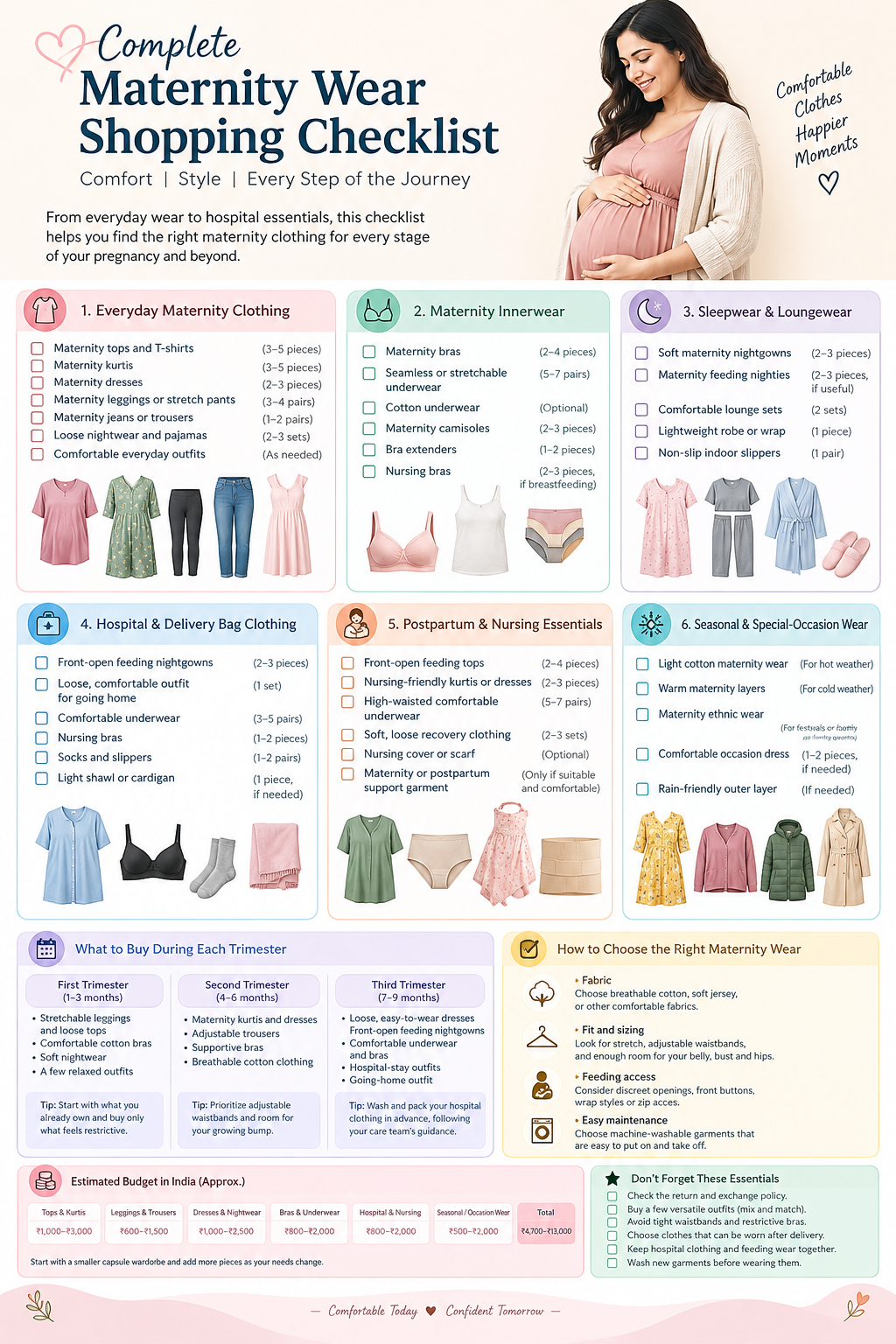
Step 1: Review Your Existing Wardrobe
Before buying anything, look through the clothes you already own. Loose dresses, open shirts, stretch fabrics, relaxed kurtis and trousers with adjustable waistbands may remain comfortable for some time. You may be able to adapt a few existing outfits with simple styling changes or tailoring.
Make a list of what no longer feels comfortable and why. Is the waistband tight? Is the top too short? Does the fabric feel restrictive? Identifying the problem helps you choose the right replacement instead of buying a random item. You may only need a few new pieces rather than a complete wardrobe.
Step 2: Identify Your Everyday Essentials
Your essentials depend on your lifestyle, climate and laundry routine. Many people start with comfortable bottoms, longer tops or kurtis, a dress or two and relaxed nightwear. If you work outside the home, add outfits that suit your workplace. If you attend regular family gatherings, consider one versatile occasion outfit.
Buy gradually as your needs become clear. Choose pieces that work with more than one item in your wardrobe. A neutral pair of trousers may coordinate with several tops, while a dress can provide a complete outfit by itself. Think about how often you will wear each item before spending money.
Step 3: Check Fabric and Care Instructions
Read the fabric label and consider how the garment will feel against your skin. Cotton and soft blends are common everyday options, while stretchy knits can offer flexibility. Lightweight fabrics may suit warm weather, and layers can help during cooler months. The right choice depends on climate and personal comfort.
Check washing instructions before purchasing. If a garment requires special care, ask whether you can realistically maintain it. For frequently worn clothes, easy washing and durability may matter more than decorative details. Look at stitching, seams and fabric thickness, especially if the product is being purchased online.
Step 4: Choose the Right Fit and Size
Maternity sizes vary between brands, so use the specific size chart rather than relying on the label. Compare bust, hip and garment length measurements where available. Look for room around the abdomen, comfortable armholes and waistbands that do not press when sitting.
If you are shopping in person, try moving naturally in the garment. Sit, stand and walk to see whether the fabric pulls or rides up. If buying online, read reviews for fit notes and check the exchange policy. Avoid automatically sizing up in regular clothing without considering how the shoulders and chest will fit.
Step 5: Decide Whether You Need Feeding-Friendly Features
Some maternity clothes include features that can be useful after delivery, such as front buttons, wrap fronts, concealed zips or layered openings. If you want clothing that may work during breastfeeding, consider these features before buying. They can be useful in dresses, kurtis, tops and nightwear.
Not every garment needs feeding access. If you prefer a particular style without nursing features, choose it because it suits you. When buying a feeding garment, make sure the opening is easy to use and stays secure when closed. Check the product details rather than assuming that any front opening is designed for feeding.
Step 6: Plan for Work, Home and Special Occasions
Separate your needs by activity. Homewear should be comfortable and easy to wash. Workwear may need a more polished look and should remain comfortable while sitting for long periods. Outfits for special occasions should fit well and allow you to enjoy the event without constant adjustment.
A small number of versatile pieces can cover multiple settings. A simple dress may work for errands and casual outings, while a kurta set can suit work and family visits depending on its design. Before buying an occasion outfit, consider whether you can wear it again with different accessories.
Step 7: Build a Budget
Set a budget before browsing products. Divide it by priority: everyday basics first, work or occasion clothing next, and optional extras last. Prices vary by fabric, brand and construction, so compare similar items rather than choosing only the cheapest or most expensive option.
Consider cost per wear. An affordable item that fits poorly may not be good value, while a versatile garment worn frequently may justify a higher price. Borrowing, buying pre-loved clothes or adapting existing garments can also reduce costs. Keep some flexibility in your budget because your needs may change as pregnancy progresses.
What to Buy First
Start with garments that solve your most immediate fit problems. If trousers are uncomfortable, prioritise flexible bottoms. If tops are too short, look for longer tops or kurtis. If you need a simple outfit for appointments, a comfortable dress may be useful. Nightwear can be important if your current options feel restrictive.
The right first purchase differs from person to person. Do not buy a full list just because it appears in a guide. Use your daily routine and comfort as the deciding factors. Add pieces only when you identify a genuine need.
What You May Be Able to Skip
You may not need a separate outfit for every activity or trimester. Many regular clothes can still work if they fit comfortably. You may also be able to skip expensive one-time occasion wear, highly specialised items you rarely use or clothing that does not coordinate with anything else you own.
Avoid buying too many items early in pregnancy because fit preferences may change. Be cautious with products that have unclear measurements or vague descriptions. If you cannot tell how the garment fits, what the fabric is or how it should be washed, ask the seller before ordering.
Online Maternity Wear Shopping Checklist
Before checking out, confirm the size chart, fabric content, garment length, closure details, washing instructions, delivery estimate and exchange policy. Review photographs from different angles and read customer feedback if available. Make sure the colour, print and style suit the rest of your wardrobe.
Keep the order confirmation and review the parcel when it arrives. Try the garment on safely and check comfort before removing tags, where the seller’s policy allows. If the size is not right, follow the stated exchange process promptly.
Frequently Asked Questions
When should I buy maternity clothes? Buy when your current clothes stop feeling comfortable. The timing differs for each person.
How many maternity outfits do I need? There is no fixed number. Consider your routine, laundry frequency, climate and budget.
Should I buy a larger size? Use the maternity brand’s size chart. Maternity cuts are designed to accommodate a changing body, but sizing differs by brand.
Can I reuse regular clothes? Yes, if they remain comfortable. Loose dresses, open shirts and stretchy pieces may work well.
Are maternity feeding clothes necessary? No. They are an option for people who find nursing-friendly openings useful.
Conclusion
A practical maternity wear shopping checklist helps you spend with purpose. Review what you own, identify your most important needs, check fit and fabric, and consider whether garments can serve you after delivery. Prioritise comfort and versatility over buying a large number of clothes. When you are ready to shop, explore the collection at [Your Brand Name] and choose pieces that fit your routine and personal style.