Introduction
Choosing clothes during pregnancy is not only about appearance. Temperature, humidity, daily travel and changing fit can all affect what feels comfortable. In many parts of India, warm weather makes breathable fabrics and easy-to-wear styles especially useful. At the same time, different regions and seasons call for different clothing choices.
You do not need a completely new wardrobe to dress comfortably. A few well-chosen maternity pieces, combined with suitable clothes you already own, can cover much of your routine. This guide looks at fabrics, fits, Indian outfit options and shopping tips to help you make practical choices.
Why Comfort Matters When Choosing Maternity Clothes
During pregnancy, the body changes in ways that can affect how clothing fits. Waistbands may feel tight, the bust and hips may change, and garments that once worked well may become less comfortable. Heat and humidity can also influence how fabric feels against the skin.
Comfort is personal. Some people prefer loose silhouettes, while others like stretchy garments that follow the body. Choose clothing that allows easy movement, does not pinch or pull and feels appropriate for the activity. If an item causes discomfort, it is not the right choice simply because it is marketed as maternity wear.
Fabrics to Consider for Indian Weather
Cotton is a familiar option for everyday clothing because it is breathable and generally easy to care for. Cotton blends may offer additional stretch and can be useful for tops, leggings or dresses. Lightweight woven fabrics can work for kurtis and tunics, while soft jersey fabrics are useful when flexibility matters.
Rayon and other draping fabrics may suit loose dresses and occasion wear, depending on fabric weight and finish. For monsoon weather, consider how quickly the garment dries and how easy it is to wash. For winter, add comfortable layers rather than relying on one heavy outfit. Read the fibre content and care label, and choose the fabric that feels good to you.
Fit Features Worth Looking For
Look for room around the abdomen, comfortable armholes, non-restrictive waistbands and enough length at the front. Side gathers, adjustable drawstrings, wrap fronts and stretch panels can help garments adapt to a changing body. For trousers, check whether the waistband sits comfortably when standing and sitting.
Avoid choosing a garment solely because it looks roomy in a photograph. The shoulders may be too wide, the neckline may shift or the fabric may still pull across the bump. Check product measurements and, when possible, try the outfit while sitting and walking. A balanced fit often feels better than simply buying a much larger size.
Indian Kurtis and Tunics
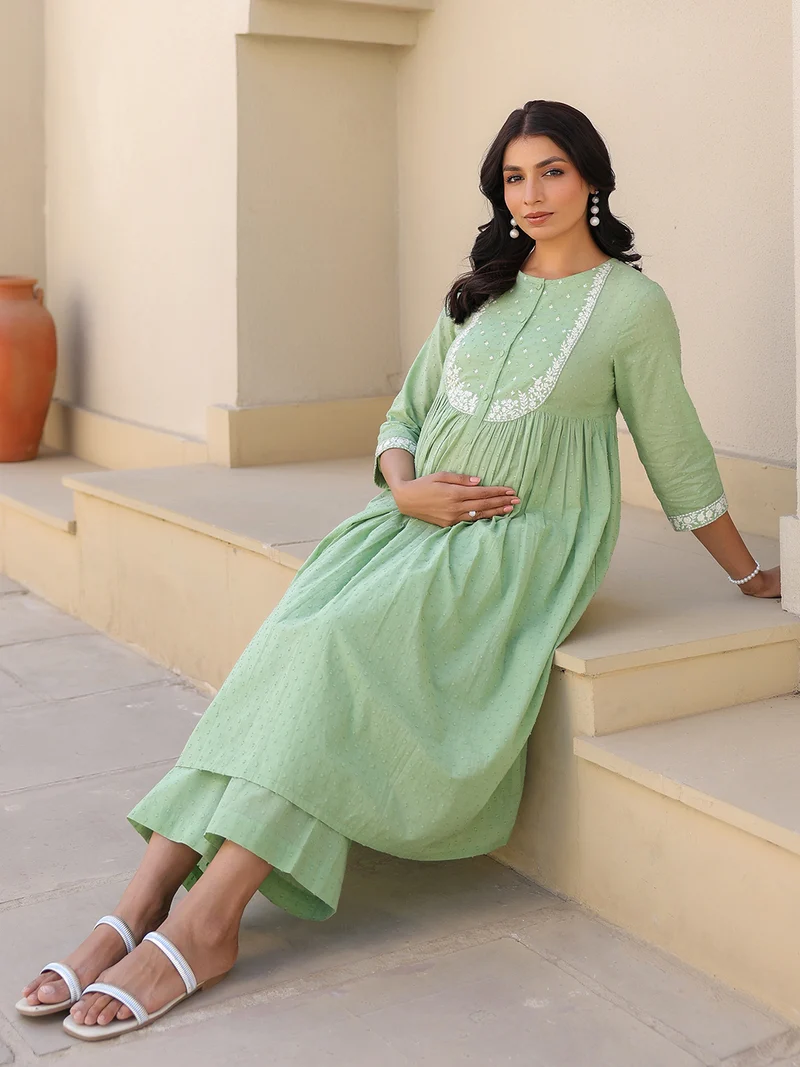
Kurtis and tunics can be versatile choices during pregnancy because they come in many lengths, fabrics and silhouettes. A-line kurtis and relaxed tunics provide room around the abdomen, while Anarkali-inspired cuts offer a more flared shape. They can be paired with leggings, palazzos or other comfortable bottoms depending on personal preference.
For daily use, choose easy-care fabric and a length that works for walking and sitting. If you prefer ethnic wear for office or family occasions, a coordinated kurta set can provide a complete outfit without much effort. Check the bust, sleeve and hip measurements as well as the front length.
Dresses, Leggings and Lounge Wear
Dresses are convenient because they create a full outfit with one garment. A-line, empire-waist, wrap and relaxed maxi styles are common options. For bottoms, maternity leggings or trousers with flexible waistbands can pair with longer tops and tunics. Choose the waistband style that feels most comfortable for you.
At home, soft lounge pants, relaxed night suits and loose dresses can be practical. Choose pieces that are easy to put on and remove, particularly if bending or fastening clothing becomes inconvenient. Consider how frequently you wash clothes and select fabrics that suit your routine.
Dressing for Hot Days
On hot days, lightweight garments and breathable fabrics may feel more comfortable than heavy layers. Choose relaxed silhouettes that allow movement and avoid seams or waistbands that press uncomfortably. Lighter colours are a style option, but fabric weight and comfort matter more than colour alone.
For outings, carry a light layer if you expect to move between hot outdoor spaces and air-conditioned interiors. Choose shoes that feel stable and comfortable for the length of your outing. Clothing cannot control the weather, but practical fabric and fit choices can make your day easier.
Monsoon and Winter Maternity Wear
During monsoon season, choose garments that are easy to wash and dry, and avoid hems that drag along wet roads. A simple kurti and comfortable trousers can be easier to manage than a very long dress on rainy days. Keep a light extra layer available if the weather changes.
In winter, layering gives you more flexibility than wearing one bulky garment. Soft cardigans, open shirts and light jackets can be worn over maternity tops or dresses. Make sure layers do not restrict movement around the arms or abdomen. Choose the combination that works for your region and indoor temperature.
Maternity Wear for Work and Travel
For work, create a small rotation of comfortable outfits that coordinate with one another. Neutral trousers, longer tops, kurtis and simple dresses can be mixed with different layers. Choose garments that remain comfortable while sitting for long periods and that are easy to care for.
For travel, think about how long you will be seated, whether you will need to change layers and how easy it is to use the restroom. Flexible waistbands and soft fabrics may be practical choices. Individual comfort needs differ, so follow your healthcare professional’s advice about travel and activity during pregnancy.
Buying Maternity Wear on a Budget
Start by checking your existing wardrobe. Loose dresses, open-front shirts, stretch fabrics and adjustable-waist bottoms may continue to work for a while. Then list the gaps: perhaps you need comfortable trousers, a few longer tops, sleepwear or one outfit for work. Buying to fill specific gaps is more useful than shopping without a plan.
Choose items that can be mixed and matched. Before placing an online order, check measurements, fabric composition, care instructions, delivery details and the exchange policy. If a garment is expensive, consider how often you will wear it and whether it can be useful after delivery. Borrowing or buying pre-loved maternity clothing may also be a practical option.
Shopping Checklist
Before buying, ask yourself: Does the garment feel comfortable? Is there enough room around the abdomen and bust? Can I sit and walk without pulling or pinching? Is the fabric suitable for the season? Can I wash it easily? Does it coordinate with clothes I already own? Would feeding access or postpartum use be helpful? These questions help you focus on usefulness rather than impulse purchases.
For online shopping, compare measurements instead of relying only on labels. Review product photographs and read the seller’s policies. If you need assistance, contact the seller with your measurements and ask which size chart to follow.
Frequently Asked Questions
Which fabric is best for maternity wear in India? Cotton and soft blends are popular choices, but the best option depends on climate, garment design and personal comfort.
Are kurtis suitable during pregnancy? Relaxed kurtis and tunics can be practical if they provide enough room and fit comfortably at the bust, abdomen and hips.
Can I wear regular clothes? Yes, if they remain comfortable and allow easy movement. Add maternity-specific pieces when your usual clothes no longer fit well.
What should I wear in summer? Consider lightweight, breathable fabrics and relaxed styles that feel comfortable in warm weather.
How can I avoid overspending? Start with wardrobe essentials, reuse suitable clothes and buy additional pieces only when a real need arises.
Conclusion
Comfortable maternity wear should suit your body, weather, lifestyle and budget. Focus on breathable-feeling fabrics, flexible fits and versatile pieces rather than buying a large wardrobe at once. From kurtis and tunics to dresses and lounge wear, the right choices can help you feel more comfortable throughout pregnancy. Explore the collection at [Your Brand Name] for styles that match your preferences.